
We enter into the last day of November and Christmas looms large on the horizon….what better time than an uplifting news dump from your friends at IST?
Locally–Today is the last day of hurricane season and my area dodged another bullet this year….the weather has finally turned cooler but still little to no rain.
Personally–Thanksgiving dinner came off without a hitch (for a change)….everybody got fed and left before they got boring.
Let’s move on to the lesser known stories of the past week….
How about a self-contained bath unit?
A Japanese showerhead maker called Science Co. is planning to debut what it’s calling the “human washing machine of the future” at the Osaka Kansai Expo in April — and while we have no idea who the target customer might be, consider us morbidly fascinated.
The washing machine, which pretty much looks like a hypersleep chamber from Aliens (1986), will wash and dry willing humans in about 15 minutes, Japanese newspaper The Asahi Shimbun reported. And if getting scrubbed down like a frying pan isn’t a compelling sell, the washing machine of the future purportedly offers therapeutic benefits, too.
A separate Japanese paper, The Mainichi Shimbun, reported that “sensors scanning the person’s back measure their levels of stress and fatigue, and in response, the device outputs imagery in pace with their state of body and mind to create a relaxing space for them.”
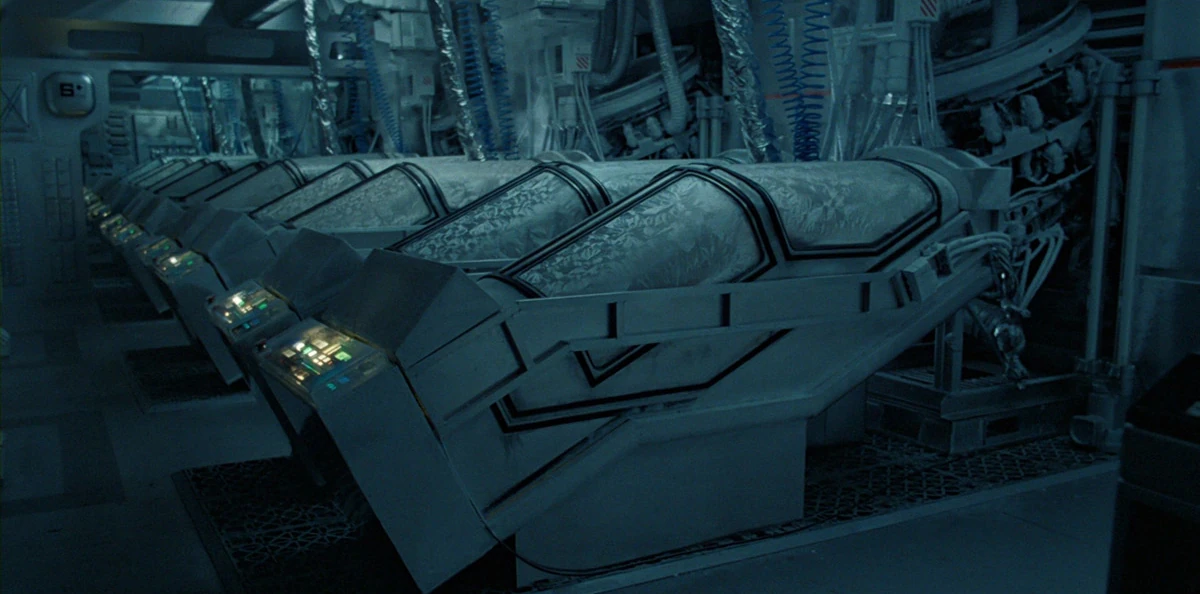
https://futurism.com/the-byte/human-washing-machine
With a few alterations if could double as a suicide machine as well….
As long as we are on the sciencey side of the news….how about time travel?
Death and taxes—the twin inevitabilities of human life. At least, for the moment. If you ask some of the most prominent futurists in the world, death may not be on that (admittedly short and cliché) list for much longer.
There’s a controversial idea floating around the futurist community of “longevity escape velocity.” It sounds super sci-fi, but it’s basically the idea that as our life extension technology gets better, our life expectancy could increase by more than we age over a set period of time. For example, as medical innovations continue to move forward, we would still age a year over the span of a year. But our life expectancy would go up by, say, a year and two months, meaning we would functionally get two months of life back.
In March of this year, Ray Kurzweil—former Google engineer and prominent AI-centric futurist—told multiple outlets that he believed humanity would achieve longevity escape velocity by 2029.
https://www.popularmechanics.com/science/a62990579/humans-backwards-in-time/
Moving on….what happens when some pandemic or alien invasion (ET not immigrants) invades and takes out the human race….what will take our place as the dominant species? Will it become the ‘Planet of the Apes’ or will some other species that rises above?
Humanity’s reign as Earth’s dominant species has always seemed invincible, but what if it isn’t? As history reminds us, no species holds the throne forever. In light of growing global crises, scientists are exploring the chilling question: which species would rise if humans went extinct? One answer stands out, and it’s not the cockroach, as many might think.
According to Professor Tim Coulson, a zoologist at Oxford University, the octopus might be humanity’s successor. “Octopuses are among the most intelligent, adaptable, and resourceful creatures on Earth,” Coulson explains. Their unique neural structure, decentralized nervous system, and problem-solving capabilities set them apart. Unlike primates, which share our vulnerabilities, octopuses could thrive in our absence. If we were to go extinct, the reason we would have would probably do in apes, too.
The octopus’s intelligence is nothing short of remarkable. They solve puzzles, use tools, and even communicate through color changes. Coulson speculates that, given millions of years, octopuses could develop underwater civilizations. “Their adaptability could lead them to construct underwater communities resembling cities we see on land,” he says.
What Creature Would Take Over If Humans Go Extinct? Scientists Make Eerie Predictions.
Now would be a good time for some climate stuff…..
Remember when there was this big push to capture carbon emissions?
Most governments around the world, especially those of high-income countries, are failing to achieve the target of the Paris Agreement, signed in 2015 by 195 countries and the European Union. As carbon dioxide emissions continue to increase, for many the solution is to develop technologies to simply remove this greenhouse gas from the air. A new study suggests that this is much easier said than done.
The research comes from the Massachusetts Institute of Technology Energy Initiative. The work focused on direct air capture or DAC, technology that removes carbon dioxide from regular air. The team discovered that DAC strategies rely on overly optimistic, if not unrealistic, assumptions. The work states that this can lead to misleading results that impact strategies to stabilize the climate.
The scientists found three engineering challenges. One is where to build the facilities. They will be exposed to the elements, which might affect their lifetime, and they need a place to store the carbon dioxide removed from the air. This is linked to the second issue of energy. These facilities need to be near a low-carbon electricity source.
While the researchers stated that the issues related to the location are “commonly underestimated in the real world and neglected in models”, those will appear minor compared to the electricity need. If coal power were used to remove CO2 from the atmosphere, you’d actually end up with 20 percent more carbon dioxide than you started with.
We all know of the problem we have with plastics in the water, right? There may be a solution.
A new plastic has been created, and its makers say it combines durability with complete recyclability while also breaking down in seawater and soil, in case it is not disposed of properly. Given the scale of plastic buildup in the oceans and the widespread presence of microplastics in the environment, any solution is welcome, but hopes have been raised before.
It’s hard to keep up with the scale of the plastic garbage patches growing in each ocean. Meanwhile, microplastics produced by the breakdown of larger plastic items are appearing in many disturbing places. Although how much harm microplastics do is still uncertain, there are signs that even when they are not harmful themselves, they can offer a ride to other undesirables.
With plenty of people apparently resistant to all pleas to dispose of plastic items responsibly, and recycling programs tackling a tiny portion of the problem, a technological solution is in great demand. Researchers at the RIKEN Center for Emergent Matter Science say they have the answer.
Many plastics advertise themselves as biodegradable – but while some really will decompose in your compost bin, or even in landfill, they won’t do the same in salty water. To address this, the RIKEN team combined two monomers with salt bridges between them. Each monomer can easily be consumed by bacteria, and indeed one of them – sodium hexametaphosphate – is a common food additive found to be harmless to animals in extensive testing.
https://www.iflscience.com/new-biodegradable-plastic-leaves-no-microplastic-waste-in-seawater-76963
Like many other ‘discoveries’ to help the environment this one may vanish into the same black hole that the others gone before.
It has been reported that water will soon become a major worldwide problem….but maybe not….
Removing water from the air can make places more comfortable, and it can also provide a vital resource when water is scarce. However, the process is more laborious than it might seem at first, and different techniques have different drawbacks. Polymers have been used to efficiently remove water from the air, but getting the water back out of the polymers is not a cheap task – or it wasn’t. A breakthrough might change that.
The polymers used in this breakthrough make up an adsorbing material. That’s not a typo: Absorbing material gets soaked through, but an adsorbing one keeps molecules on its surface. Still, the release (or desorbing) is the problem. Usually, these polymers need to be heated to around 100°C (212°F) to release the water. A team of researchers has now developed a liquid moisture adsorbent that releases water at a temperature of around 35°C (95°F).
This new approach is made possible by using two polymers. One is polyethylene glycol, which is used in several industrial applications and even in some medicines – for example as a laxative (it works by increasing the amount of water in the stool because it is such a good adsorbent). The other one is polypropylene glycol, which is similar but not as good as adsorbing water and is actually a main component of paintballs.
The difference in their ability to trap water is the crucial breakthrough of this work. As they fight over water molecules, they create a transfer mechanism that allows them to break down water clusters so that the precious liquid can be more easily extracted.
“This technology has the potential to be applied not only to water supply in arid regions and places with limited energy resources, but also to ensuring access to water in times of disaster and emergency,” co-author Assistant Professor Arisa Fukatsu, from Osaka Metropolitan University, said in a statement.
https://www.iflscience.com/fresh-water-can-now-be-easily-harvested-from-the-air-77006
I am sure that there will be some clever thought in this application.
That is it for the Dump on this Saturday…..onward toward the next holiday….and the endless ‘Little Drummer Boy’ boring through your head.
Enjoy your day if you can and as always….Be well and Be Safe…..
I Read, I Write, You Know
“lego ergo scribo”